


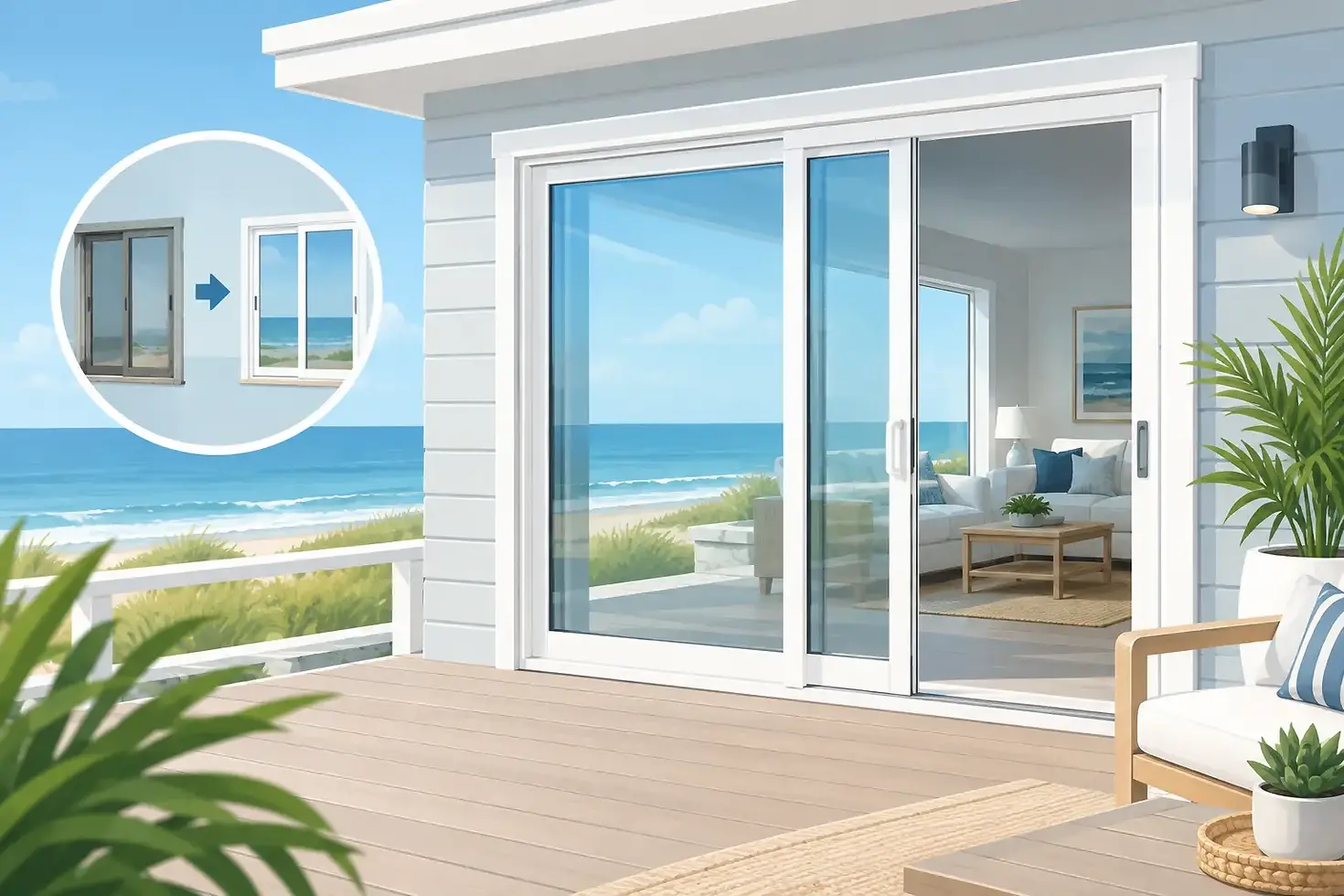
Sliding Door Replacement Guide for Coastal Homes
A sliding glass door should make stepping onto the porch, deck, or pool area feel easy. When it sticks, leaks during a hard rain, fogs between the panes, or no longer locks with confidence, it becomes more than a daily annoyance. This sliding door replacement guide helps Grand Strand homeowners recognize when replacement makes sense and prepare for a door that better suits a coastal South Carolina home.
Know When a Sliding Door Needs Replacement
A stubborn door is not always a failed door. Dirt in the track, worn rollers, or a simple adjustment can sometimes restore smoother movement. But a door that continues to bind after service may have a bent track, deteriorated rollers, or a frame that is no longer square. Repeated repairs can become frustrating when the door is older and other problems are starting to show.
Water intrusion deserves closer attention. After a driving rain, look for damp flooring, stained trim, peeling paint, or a musty smell around the opening. A sliding door depends on proper sill flashing, drainage, weatherstripping, and installation details to direct water away from the home. In the Myrtle Beach area, salt air, summer humidity, wind-driven rain, and intense sun can expose weak spots faster than homeowners expect.
Cloudiness or moisture between glass panes is another common sign. It usually means the insulated glass seal has failed. The door may still open and close, but its energy performance and clear view have been compromised. A new patio door can also address drafts, worn seals, faded frames, damaged screens, and locks that no longer provide the peace of mind you want for a first-floor opening.
Start With the Opening, Not Just the Door
The right replacement begins with an honest look at the entire opening. A new panel alone will not solve problems caused by damaged framing, deteriorated exterior trim, poor flashing, or an undersized header. This is especially true when an older door has leaked for years without being noticed.
During a professional consultation, the installer should assess the sill, surrounding wall area, door operation, exterior drainage, and condition of the existing frame. Measurements matter, but so does understanding what is behind the trim. A careful evaluation helps determine whether the project calls for a replacement door within an existing sound frame or a more complete removal and rebuild of the opening.
This is also the right time to discuss how you use the space. A door leading to a screened porch has different needs than one opening directly to a sunny pool deck. A second-home owner may prioritize security and low maintenance, while a family may need a wider clear opening for entertaining, pets, or moving patio furniture. Good recommendations should fit the home and the way you live in it, not simply fill a rough opening.
Choose a Patio Door Style That Fits Your Home
Most homeowners start with a traditional two-panel sliding glass door: one panel stays fixed while the other glides open. It is a practical choice for many patios because it does not swing into the room or take up deck space. Modern sliding doors can offer larger glass areas, improved weatherstripping, smoother operation, and stronger locking systems than older units.
A three- or four-panel configuration can create a broader connection to an outdoor living area. These options are worth considering when a home has a wide wall opening or when the goal is to improve access to a deck, sunroom, or pool. They do require enough wall space and structural planning, so this is not always a simple door swap.
French-style sliding doors are another option for homeowners who prefer a more traditional appearance but still want the space-saving operation of a slider. If you are considering hinged French doors instead, remember the trade-off: they can create a beautiful, wide opening, but the swing direction must work with furniture placement, screen options, and the available patio space.
The best style depends on the opening, your budget, architectural preferences, and how much of the project is changing. A skilled contractor can help you compare these choices without pushing a one-size-fits-all answer.
Select Features for Coastal South Carolina Conditions
Glass is a major part of any sliding door decision. Low-emissivity, or Low-E, glass coatings can help reduce heat transfer while still allowing natural light into the home. The right glass package depends on the orientation of the door, nearby shade, and how much afternoon sun reaches the room. A west-facing patio door may need a different approach than a shaded porch door.
Frame material matters, too. Vinyl, aluminum, fiberglass, and composite options each have strengths. Vinyl can be a practical, low-maintenance choice. Aluminum can offer a slimmer profile and strength, while other materials may appeal to homeowners looking for particular finishes or performance characteristics. The right product is the one that fits the opening, exposure, and expected use, not necessarily the most expensive option on paper.
Ask about the details you will use every day: rollers, handles, locks, screens, threshold height, and drainage. A quality sliding door should glide without excessive force, latch securely, and have a screen that works smoothly rather than becoming an afterthought. If insects are a concern during porch season, screen quality and fit deserve real attention.
For homes near the coast, it is also wise to discuss local code requirements and the level of wind exposure at your property. Depending on location and project scope, product approvals, impact considerations, and installation requirements may affect the choices available. Clear answers before ordering prevent unwelcome surprises later.
What Professional Sliding Door Replacement Should Include
A patio door can be well made and still underperform if it is installed poorly. The goal is not simply to remove an old unit and set a new one in place. The new door needs to be level, plumb, square, supported correctly, sealed appropriately, and integrated with the exterior water-management system.
A dependable installation process generally includes these steps:
Reviewing the opening and confirming the selected door before work begins.
Protecting nearby flooring and work areas during removal.
Inspecting the sill and framing for hidden damage or moisture issues.
Preparing the opening so the new unit can be set correctly and operate properly.
Sealing and finishing the interior and exterior details for a clean, weather-conscious result.
Some conditions cannot be fully seen until the old door comes out. Rotten wood, prior water damage, or improperly installed flashing may require added repair. That does not mean a contractor is creating extra work. It means the real condition of the opening is finally visible. Homeowners should expect straightforward communication about what was found, why it matters, and what options are available before additional work moves forward.
Plan the Project Without Guesswork
Before scheduling replacement, remove furniture, rugs, and breakable items from the work area. Make a clear path from the entry to the patio door, and plan for pets to stay safely away from the work zone. If the door is your main access point to a deck or yard, ask how long the opening may be unavailable during installation.
It is also smart to look beyond the door itself. If exterior siding, trim, a screen enclosure, or a future sunroom project is nearby, coordinating the work may produce a cleaner finished appearance and avoid redoing trim later. One experienced provider can be especially helpful when a patio door connects to a larger exterior improvement plan.
Southern Trade Windows & Doors works with Grand Strand homeowners who want clear guidance from the first conversation through the finished installation. Whether you need a straightforward sliding glass door replacement or are rethinking access to a porch, deck, or pool area, the right questions early on make the project easier to plan.
A new sliding door should feel like a small improvement every time you use it: a smoother glide, a clearer view, a tighter seal, and an easier path to the outdoor spaces that make coastal living enjoyable. If your current door is fighting you, call 843-997-8406 and talk through the opening with a local team that will answer your questions and help you move forward with confidence.


Comments